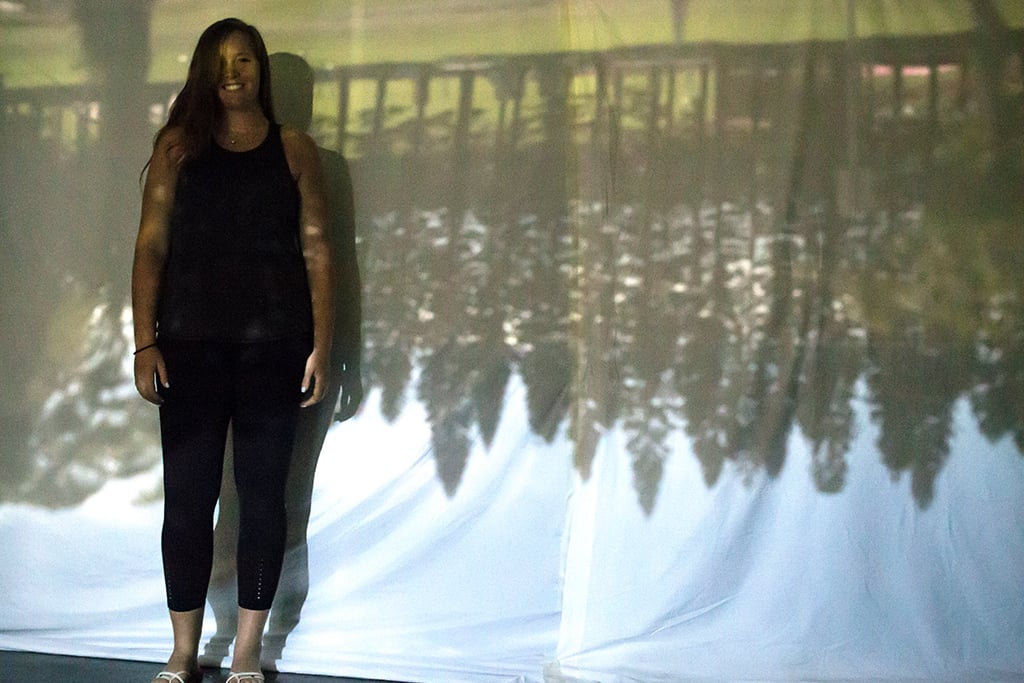
If you entered the maintenance shed near the football field this week, you experienced something remarkable—the Camera Obscura Project, created by Patricia Kassis’ astronomy class. As viewers’ eyes adjust to the darkness, an image projected onto a white sheet slowly emerges: the football field, in color, but inverted.
Miranda Guppy ’20, one of the student guides, explains how the camera obscura works. A camera obscura is a small room, completely darkened except for a pinhole-sized opening. Light enters the pinhole, which functions like the human pupil, and reflects onto the screen, which is similar to the retina. In the human eye, the retina connects to nerves that flip the inverted image. But unlike a human eye, the camera obscura image stays inverted, upside down because of the way light travels.
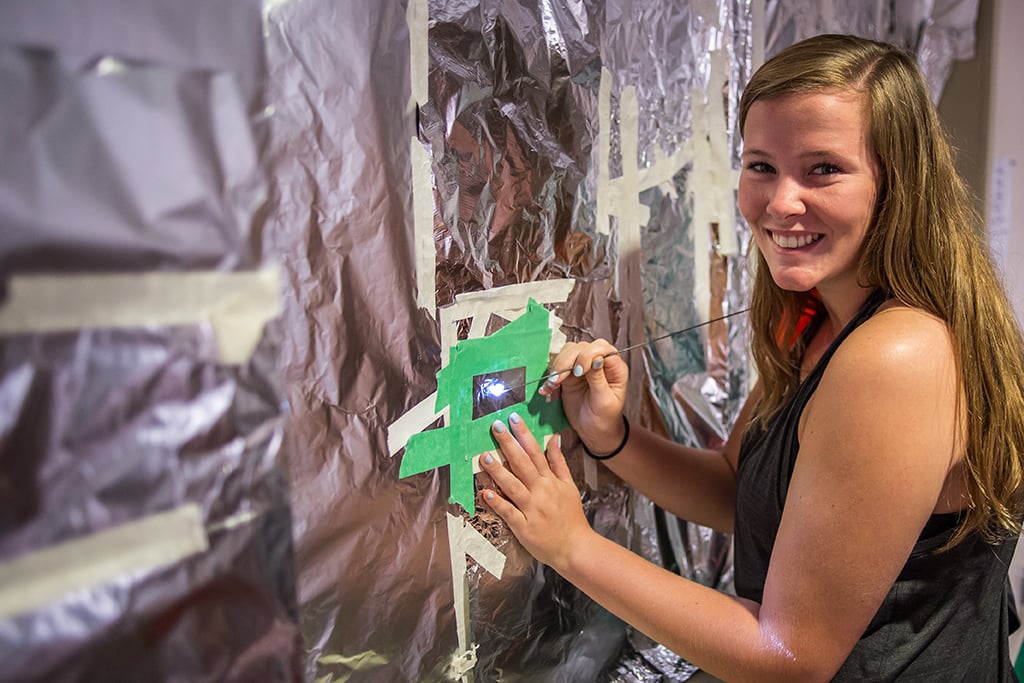
Creating HPA’s camera obscura involved sealing the windows and stuffing every crevice in the shed with tinfoil to create complete darkness. Students had the opportunity to experiment with the aperture of the pinhole as well. “I thought it was cool how we could mess with the size of the image or its clarity by playing with the size of the hole,” Guppy explains, “like working with a primitive camera.”
As viewers’ eyes adjust to the darkness, an image projected onto a white sheet slowly emerges: the football field, in color, but inverted.”
Patricia Kassis created this project as a way for her students to experience the behavior of light traveling in straight rays and to help them see why lenses or mirrors are needed to make useful images of the night sky. “Getting students out of the classroom, sharing their work with other classes,” says Kassis, “this is so important to their experience at HPA.”