Safety That Sets HPA Apart

Distance That Makes a Difference

Hawai‘i Preparatory Academy offers something increasingly rare: a safe, close-knit community in one of the most stable and welcoming regions of the United States — where students can focus on learning, growing, and belonging.

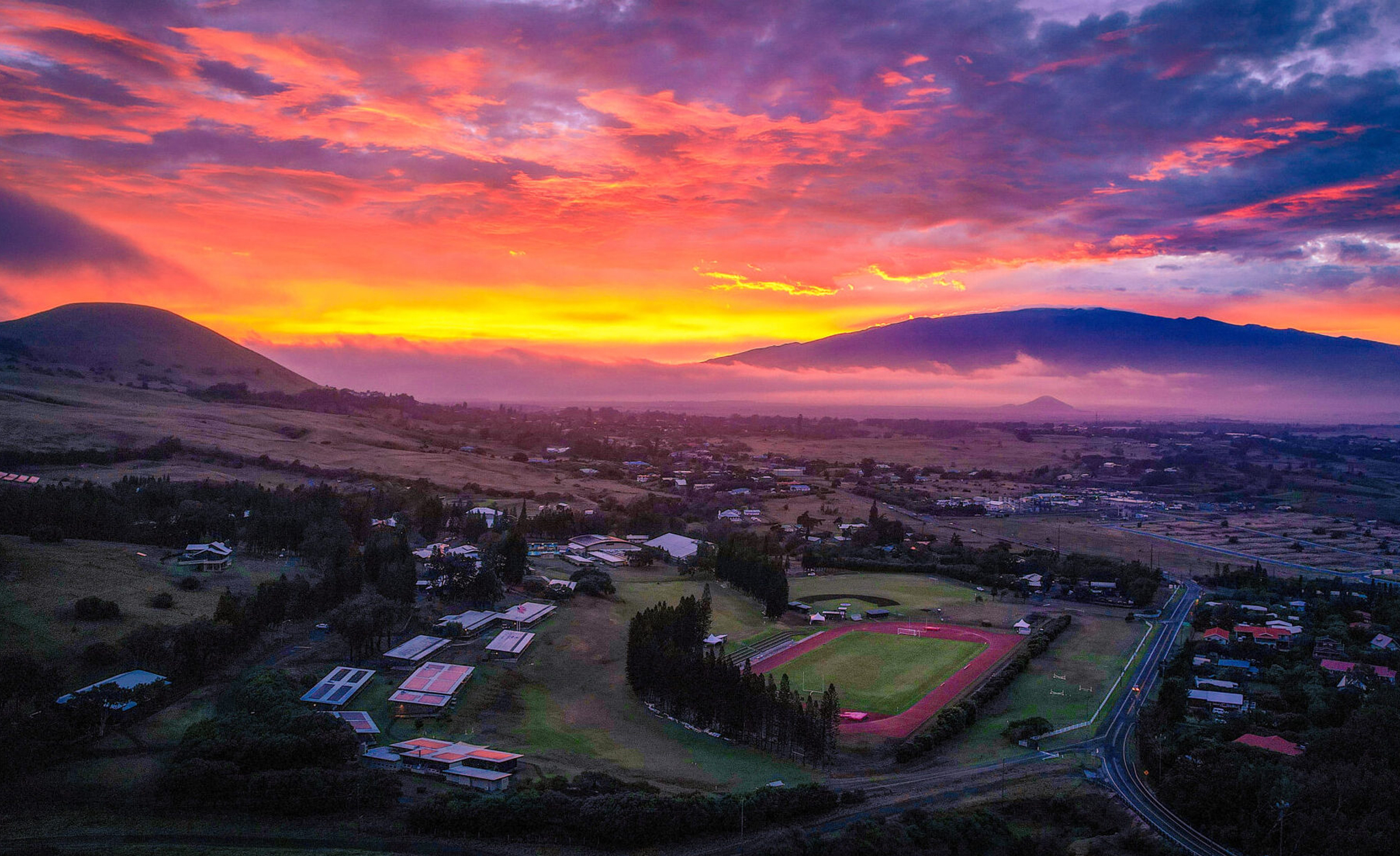
Set in the small town of Waimea on Hawai‘i Island, HPA provides a calm, residential setting far removed from the congestion and unpredictability of major urban centers. Here, students are known by name, supported by dedicated faculty, and surrounded by a culture that values respect, accountability, and connection. The result is an environment where young people can settle in quickly, build confidence, and fully engage in both their academic and personal journey.
Safety you can feel and measure

You’re not just choosing a school. You’re choosing a place for your child to call home for the next few years. Waimea is the kind of town that earns that trust — quiet, connected, and a long way from the things that give families pause about sending a child to the United States right now.

Safety Isn’t a Feature. It’s the Foundation.

  • Hawaii’s violent crime rate in 2024 was 39.4% lower than the US average
  • Hawaii’s violent crime rate is 1.84 incidents per 1,000 people, compared to a national average of 4.43 — the fifth-lowest in the nation
  • CrimeGrade.org gives Hawaii an “A” grade for violent crime, ranking it in the 86th percentile for safety nationally
  • The chance of becoming a victim of violent crime in Hawaii is 1 in 535
  • HPA is located in a rural, residential community of under 10,000 people

Students aren’t navigating a city — they’re part of a community where people know each other, look out for one another, and prioritize well-being.

A World Apart — In the Best Way

While mainland headlines may raise concerns for international families, Hawai‘i offers a distinctly different experience.

  • No large metropolitan centers
  • No dense urban corridors
  • A geographically isolated, tightly connected island community

The result: a calmer, more stable environment where students can focus on what matters most.

Clarity in an Uncertain Time

Families today are asking important questions about safety, stability, and the student experience in the United States. Hawai‘i offers a uniquely steady environment — removed from many of the challenges seen in larger mainland regions.

  • Lower levels of enforcement activity compared to major U.S. cities
  • A community-centered culture focused on education and well-being
  • A campus environment where students can live and learn with confidence

International Students Belong Here

Hawai‘i has long been one of the most globally connected and culturally diverse places in the United States.

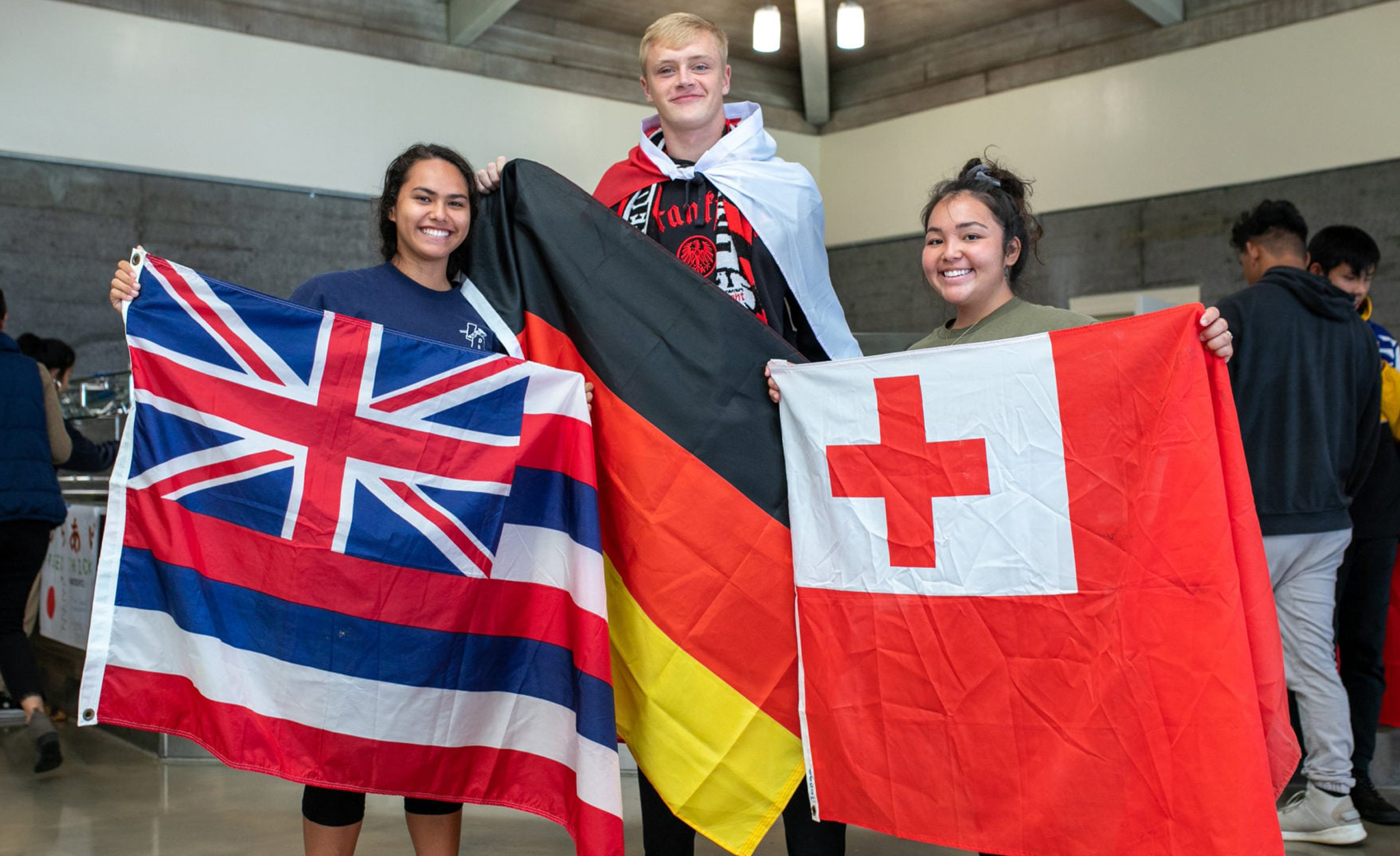
  • HPA has a long history — more than 75 years — of welcoming international students and families
  • A campus culture built on inclusion, respect, and shared experience
  • Faculty and staff experienced in supporting students from around the world

At HPA, international students aren’t navigating alone — they’re part of a community.

Frequently Asked Questions

  • Is Waimea, Hawaiʻi a safe place for my child to live and study?

    Yes — and the data backs it up. Hawaii consistently ranks among the safest states in the country for violent crime, with a rate nearly 40% below the national average according to FBI data. Within Hawaii, Waimea on the island of Hawaiʻi is repeatedly cited by safety analysts as one of the state’s most secure communities: small, tight-knit, and largely insulated from the urban crime patterns that affect larger American cities. HPA students live, study, and move around this town as part of a community that knows them by name.

  • How does Hawaiʻi compare to the US mainland when it comes to safety?

    Significantly better on the metrics that matter most to families. Hawaii’s violent crime rate is 1.84 incidents per 1,000 people — the national average is 4.43. The state earns an “A” grade for violent crime from CrimeGrade.org and ranks in the 86th percentile for safety nationally. More importantly, Waimea doesn’t have the characteristics that drive crime in many mainland cities: no dense urban core, no major transit corridors, no large transient population. It’s a small ranching and agricultural town of roughly 10,000 people sitting at 2,700 feet elevation in the middle of the Pacific Ocean. The geography itself is a kind of insulation.

  • I've seen news coverage suggesting the US is becoming less welcoming to international students. Does that affect HPA?

    We understand why families are paying attention to this. The current climate on the US mainland — particularly around university campuses and immigration enforcement — is creating real uncertainty for many international families. HPA operates in a meaningfully different environment. Hawaiʻi has one of the most internationally diverse populations of any US state, and the island’s culture reflects centuries of Pacific, Asian, and global exchange. International students aren’t a category here — they’re part of the fabric of the school and the community. HPA’s international student population has remained stable, and our admissions and student support teams are experienced in navigating the visa process with families well in advance of enrollment.

  • What does HPA do to keep students safe on campus?

    Residential life at HPA is staffed around the clock. Our dormitories are supervised by resident advisors and faculty, and the campus operates as a contained, walkable community where students, staff, and faculty know one another. Beyond physical safety, we have dedicated counseling and wellness support, a health center, and clearly defined emergency protocols. We take the responsibility of caring for students who are far from home seriously — that’s not a marketing line, it’s the operating reality of a boarding school that has been doing this for over a century.

  • How does HPA support students who are adjusting to life away from home — and away from their home country?

    Homesickness, culture adjustment, and the particular challenges of boarding school life get real attention at HPA. Our counseling team works proactively with students — not just in moments of crisis — and residential staff are trained to recognize when a student needs support before they ask for it. Many of our faculty and staff are themselves from outside the continental US, and our student body represents dozens of countries, which means your child will find peers who understand what it means to be far from home. Waimea’s pace of life — unhurried, community-oriented, close to nature — also tends to ease the transition in ways that a larger, more chaotic campus environment simply cannot.

  • Is HPA's location in the middle of the Pacific a disadvantage for families who want to visit?

    Distance is real, and we don’t minimize it. Honolulu is a major international hub with direct connections to Asia, the Pacific, and the US mainland, and Kona and Hilo airports on the Big Island offer additional access. Many of our international families find the flight times comparable to — or shorter than — reaching boarding schools on the US East Coast from parts of Asia. We also build the academic calendar around meaningful breaks and work with families on travel planning from the moment of enrollment. The distance that gives some families pause is the same distance that gives HPA students a focused, distraction-free environment. For most, it becomes a feature rather than a barrier.