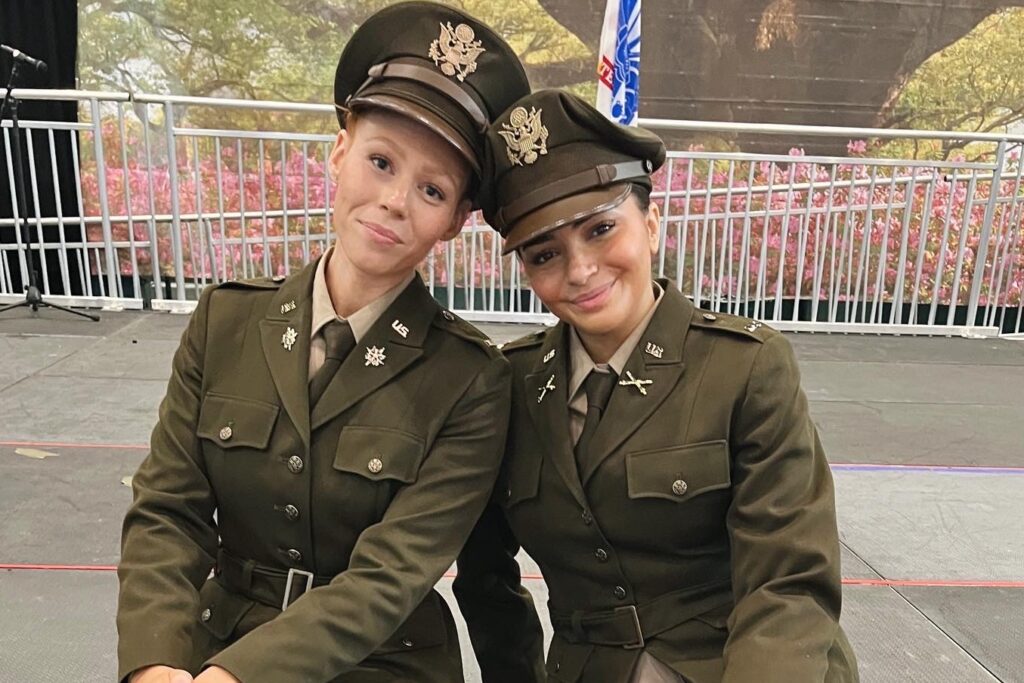
Aislinn Carroll ‘18 attended Tulane University in New Orleans, Louisiana, on a full-ride scholarship with the Army ROTC program, where she studied International Relations, Russian, and Homeland Security. After graduation, Aislinn was commissioned into the Army Reserve as a Military Intelligence Officer, and is currently assigned to an Information Operations unit. On the other 27 days a month, she works as an intelligence specialist/analyst at the Pentagon as a civilian contractor to the Department of Defense. In her free time, she takes care of her bulldog puppy, practices pilates, works on her thesis proposal for grad school applications and studies for the LSAT.
Each January, HPA convenes a panel of graduates to share advice and stories about life after HPA with our seniors. This Q&A occurred during our Young Alumni Day 2023.
What was your favorite part of your HPA experience? What made it so unique?
HPA Olympics was so much fun, but also all of the teachers and the staff. They’re really great mentors. I had a great advisor. I think Mr. [Eric] Mumau [HPA Upper School Social Studies instructor] is why I do what I do now. Being able to talk to people who are older than you and ask for mentorship from a young age is a really good skill to learn, and I think that HPA was really instrumental in that. It makes you a better conversationalist when you’re doing interviews. You can have a mature conversation pretty easily. Being able to then follow through with that and contact professors in college or others for advice later on is really helpful. I was never afraid of my professors in college because my teachers in high school were always an accessible resource to me.
How big of a connection is there to your first few college courses and your career?
I majored in international relations and it directly relates to everything I do every day. My job is to report on global geo-political events.
If you were each hiring for a position, what would you look for in HPA graduates?
HPA graduates tend to have a bit of grit and leadership experience because you actually have to work for your high school diploma, and having that stick-to-it-ness helps with the ability to solve complex problems later in life. And also, having a lot of integrity and good character. While I did lament about the demerit system while I was there, knowing that there are immediate consequences to actions, knowing what’s expected of you, and really valuing honesty and integrity, it’s really important in most fields in life and just being an adult in general and especially when you’re working for sensitive projects.