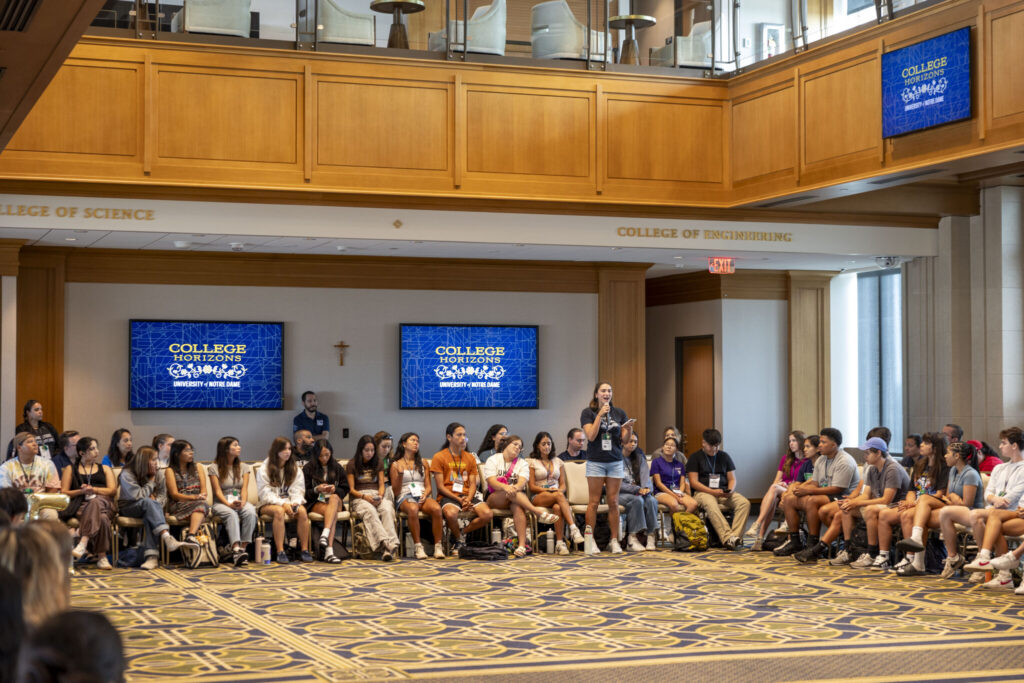
College Horizons is a hugely successful national program dedicated to increasing access to higher education for Native American, Alaska Native, and Native Hawaiian students. Its relationship with HPA spans many decades — since the 1990s, when Dr. Whitney Laughlin, College Horizons’ founder, worked as a college counselor at HPA. In 2012 and 2018, HPA served as a host site for College Horizons, bringing nearly 100 Native Hawaiian students to campus for a week-long college admission workshop.
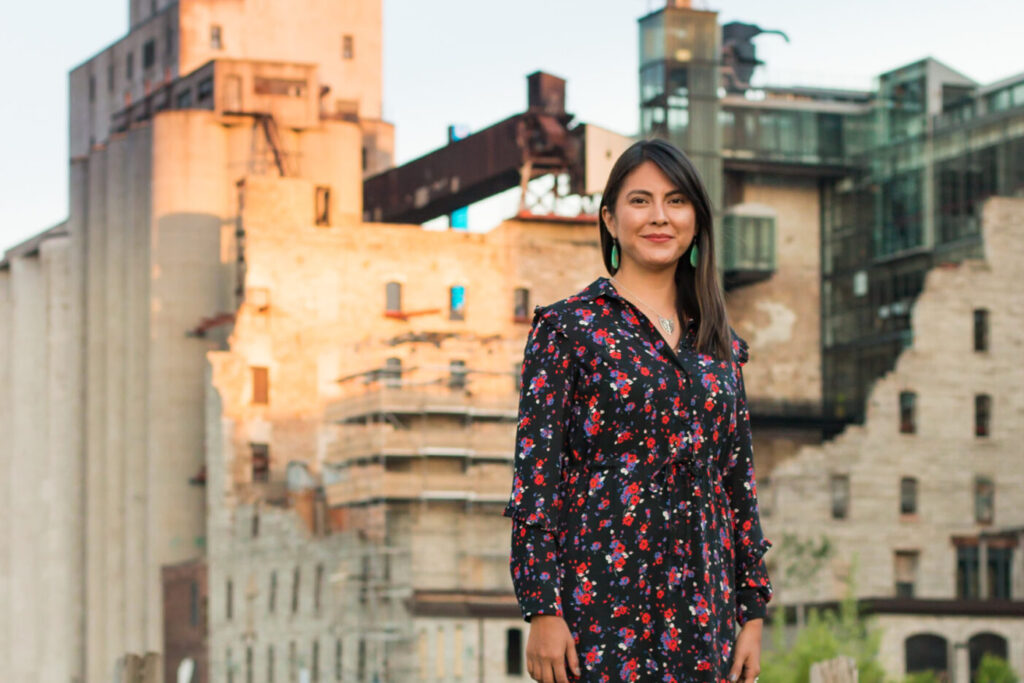
This summer, HPA will again host College Horizons’ week-long workshop. We spoke with College Horizons’ Scholars Program Director, HPA alumna Mikaela Crank ’03, about their work. Crank is a citizen of the Navajo Nation, of the Towering House and Folded Arms clans. She has worked for College Horizons for the last eight years, and prior to that, she worked for Stanford University’s Office of Undergraduate Admission as a Native student recruiter. She holds a B.A. from Arizona State University and an Ed.M. from the Harvard Graduate School of Education.
College Horizons has an impressive track record. Can you help us understand the need you’re addressing?
The challenges that affect the Native community are vast and nuanced. Social determinant factors (including economic stability, political systems, healthcare, housing, and historical trauma) greatly influence the students and families we serve.
Especially from an educational standpoint, half of Native American students graduate from high school and only about one in 20 will attend a four-year college or university. College Horizons’ mission is to address the college attainment gap by providing college and graduate admissions workshops to these students. In the last 26 years, College Horizons has helped more than 4,000 Indigenous students from across the country earn college and graduate degrees with an astonishing 85% college completion rate compared to 24% nationally.
How are the issues facing Native Hawaiian students different from the issues affecting American Indian and Alaska Natives?
Both Native Hawaiians and Alaska Natives often get merged with the general Native population, so from a statistics perspective, much of the data just generalizes or ignores the needs particular to those groups. A major difference for the Native Hawaiian population we serve is the issue of sovereignty. College Horizons acknowledges the historical injustice of the Hawaiian Islands being seized, leading to the loss of recognition as a sovereign nation.
What is the College Horizons “crash course” week like for participating students?
It’s a six-day pre-college program that prepares 10th and 11th grade Native students for the college application and financial aid process. They learn about 70+ colleges/universities, engage with college admission representatives, and experience life on a campus for a week. Students work directly with college admission officers and high school counselors to develop a college list, complete a polished Common App, write a memorable personal essay, receive ACT/SAT test strategies, identify scholarships, and get advice on how to succeed in college as a Native student. College Horizons will admit 300+ Native students nationwide this summer to attend our three programs at Hawai’i Preparatory Academy, Northwestern University, and Yale University. The program at HPA is open only to Native Hawaiian students.
Apply Today
College Horizons is accepting applications from Native Hawaiian students for its week-long summer program at HPA from now until January 29, 2025. The program is free to participants and will be held from June 7-13, 2025.
You’re an alumna of both HPA and College Horizons. What was your experience at HPA like, particularly as a Navajo woman?
My student experience at HPA was very positive. It was a safe space that allowed me to exercise my independence, foster relationships with my peers in the dorms, classrooms and cross-country team. A very formative experience at HPA was my participation as a runner on the cross-country team. It enabled me to deepen my connection with the island and bond with my teammates. I loved having practice at the beach or on the rainforest trails. Running has always been my therapeutic outlet, but it also has a significant connection to my culture which is why I felt that it was even more meaningful to run on the ancestral homelands of the Kanaka Maoli. Being able to connect to the land is what helped with any homesickness of being thousands of miles away from Arizona. My HPA experience helped me articulate my culture to others who were not familiar with the Navajo Nation, and it was a common thread when I learned from my peers who were local Native Hawaiians or Indigenous from Tahiti, Samoa, or Micronesia. I learned how unique and special it was to be a Navajo citizen, but also how it translated to other Indigenous communities.
What advice do you have for HPA students today?
If at all possible, experience HPA beyond the campus borders and find ways to connect to the land. I went to high school when there was no social media, and everything was very much about the in-person, in the moment experience. If there are ways to disconnect from the platforms, try to find more genuine connections with peers. Practice self-advocacy and exercising your independence as a young adult. These skills that you are learning at HPA are vital to when you go off to college.