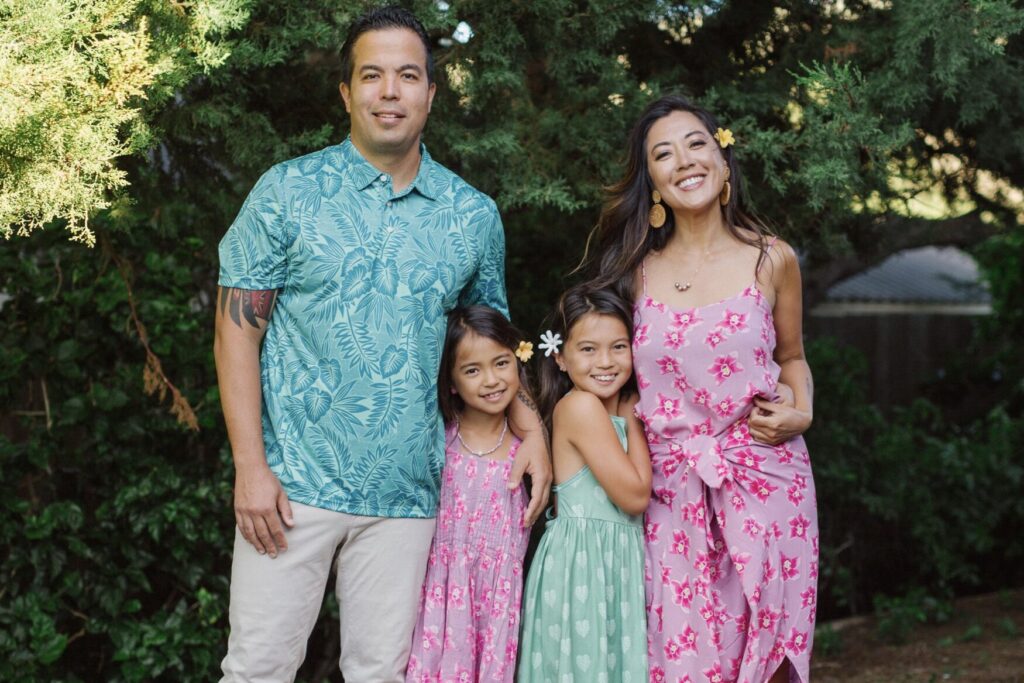
Kolby Moser’s Hometown Legends was recently featured as the second offering in Hawaiʻi Preparatory Academy’s film series, Voices for Belonging and Community Conversation.
The film highlights several respected kūpuna (elders) from Hawaiʻi Island, who are revered as masters of their respective Hawaiian crafts including poʻe ulana (weavers), paniolo (cowboys), hoe waʻa (paddlers), lawaiʻa (fishermen), and pahu (drum) carvers.
“Hawaiians have long been known for their storytelling and oral history, so in a society quickly moving away from cross-generational conversations and traditional mea hana we sat down with five legendary kūpuna to document their history, craft, and kuleana as it was passed down to them,” explained co-director Moser. “We capture their journey, adversities overcome, accomplishments, and the wisdom they believe is important to pass down to the next generations,” added Moser, who co-directed the documentary with Nainoa Lange.
Q: What inspired you to want to capture the stories of our Hawaiʻi Island kūpuna for Hometown Legends?
I first dreamt up the idea of Hometown Legends before I became a filmmaker. I spent a lot of my childhood with my grandparents, watching them cook traditional Japanese and Hawaiian foods, grow Native Hawaiian plants for medicine, stare at the moon and ocean tides to know when to fish — so many valuable lessons I took for granted until it was too late. I think this is true for much of my generation. A generation whose parents never learned the language and who were often embarrassed to call themselves Hawaiian. Our culture nearly went extinct after the overthrow of the Hawaiian Kingdom in 1893, due to colonization and Western influence. And, despite the Hawaiian cultural renaissance of the 1970s that brought many of these cultural practices out of the shadows, we are still losing ancestral knowledge from our kūpuna (elders) faster than we can capture it. My team and I have taken on the kuleana (responsibility) to elevate the voices of our kūpuna, share the mo’olelo (stories) that will help educate and perpetuate our culture, and inspire others to do the same.
Q: I understand you are working on Hometown Legends Molokaʻi next — who has been one of the most inspiring kūpuna you have met there, and what are you most excited to highlight about that experience?
Yes, we are looking forward to creating Hometown Legends Molokaʻi as well as Kauaʻi, Oʻahu, and all the islands. However, we feel deeply that our attention and efforts should be given to the people and place of Lāhainā right now — so we are currently in preproduction for that and will start production when the time is right. We discovered through our pilot film that the world is craving grounding, connection to place, and wisdom from our elders now more than ever, and I believe Hometown Legends Lāhainā would be a powerful way to aid in the healing process as well as honor the people of Lāhainā.
Q: The HPA ʻohana has witnessed you in action these last two years at our Commencement ceremonies, and the highlight videos that you have produced for us manage to capture the heart of our unique graduation in such a special way. As someone who has covered many of those hallmark moments for other schools, what do you think sets HPA apart from the rest?
The word that I hear more often at HPA than anywhere else is kuleana (responsibility). On top of the wonderful education and tight-knit community that our keiki experience at HPA, I love that they are taught that they have a responsibility to this place and to each other. (Also, no one does May Day like we do — mahalo Kumu Kuwalu!)
Q: As a parent of two Lower Schoolers, you have a little more time before you’ll be in the stands of Castle Gymnasium watching them receive their diplomas in their dress whites — in the meantime, what do you hope to instill in them through your lens as a parent and filmmaker?
Being a mom in any profession is so tough! I have so much respect for all you moms and dads who are getting it done and continuing to find that balance. As a filmmaker, my girls know that sometimes I’ll have to miss a swim meet because of a shoot or have to be away for longer periods of time, but I try to include them as much as possible in the process. They meet the crew, come to screenings — they even get to be in commercials sometimes. I just hope that they see their mom working hard (in a very male-dominated industry) doing what she loves and knowing that they can do the same — whatever that is!
Q: What story have you not had the chance to tell that you’re just waiting for the right opportunity or circumstance?
Hometown Legends was my “one day” film. Every filmmaker will tell you about a film that they plan to make “one day.” I talked about it for 20 years before I finally made it. But, now that we’ve started this series, my focus is to find a way to continue telling these stories and continue connecting with kūpuna around Hawaiʻi that have so much ʻike (knowledge) to share (there are so many!). My hope is that these films will not only act as a repository for this ancestral knowledge, but will inspire our keiki to step into their own kuleana. “Ka naʻauao o nā kūpuna ka lama e hoʻomālamalama i ke ala no nā keiki.” The wisdom of the elders is the torch that enlightens the path of the children.
Voices for Belonging and Community Conversations Film Series
Last spring, in partnership with the HPA Diversity, Equity, and Inclusion Committee, Voices for Belonging and Community Conversations was launched to inspire thoughtful dialogue about place, identity, and belonging through storytelling.
Hold Your Fire, a critically acclaimed documentary about how NYPD became the first police force with a modern hostage negotiation department, was the first film showcased. The screening was followed by a robust and thoughtful Q&A session with the filmmaker, HPA parent Stefan Forbes.