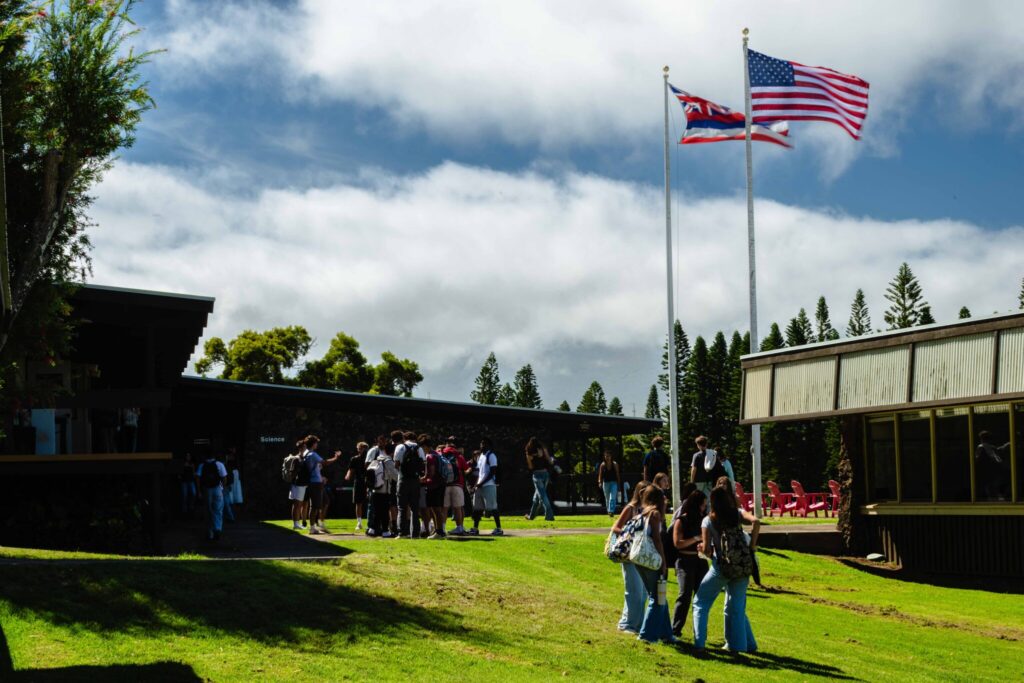
The change is easiest to hear. In classrooms, around lunch tables, and across the Upper Campus, conversation has more room to grow. Students are looking up, engaging with one another, and giving more of their attention to the people and experiences directly in front of them.
Those moments reflect the early success of HPA’s new Mobile Device Policy, which limits student access to personal devices during the academic day. The policy is designed to reduce distractions while helping students develop greater focus, independence, and balance in their use of technology.
“At HPA, we believe meaningful learning begins with attention,” HPA Curriculum and Instruction Coordinator Amanda Aragon said. “The policy gives students the chance to be fully present—in the classroom, at lunch, and with each other—so they can engage more deeply and build the relationships that matter most during their time here.”
The Upper Campus initiative builds on HPA’s experience at the Village Campus during the 2025-2026 school year. Middle School students used Yondr pouches to secure their phones during the school day, creating a more focused and connected learning environment. The results were overwhelmingly positive. Teachers saw stronger classroom engagement, fewer distractions, and more meaningful interaction among students.
Mālama Kaiāulu—caring for our community—starts with being fully present with one another. That’s the spirit behind our Mobile Device Policy: a phone-free academic day that helps students build the focus, self-discipline, and connection they’ll carry with them long after they leave HPA
When HPA began considering a similar policy for the Upper School, the school gathered feedback from students, faculty, and families. There was strong support for limiting mobile device use, but families also raised an important concern: Students needed to retain quick access to help while moving independently across the larger Upper Campus. HPA selected LockedIn as an approach designed for those distinct needs. The application supports a phone-free academic day while preserving access to emergency services and other safety features.
At the Upper Campus, the Mobile Device Policy applies from 8:30 a.m. to 3 p.m. in classrooms and shared spaces, as well as during lunch, free blocks, passing periods, and time in the library. During those hours, students keep personal mobile devices out of sight unless a faculty member authorizes their use for a specific educational purpose. Laptops and other approved instructional technology remain available throughout the day.
The purpose is not to remove technology from students’ lives. Technology remains an essential part of learning and modern life. Instead, HPA wants students to develop the judgment and self-discipline to understand when technology is helpful and when it stands between them and an important experience.
LockedIn places students’ phones into a restricted school mode during the academic day. The application does not allow HPA to read students’ messages or emails, view their photos or contacts, access their cameras or microphones, or track them outside school hours. Students can still call 911 in an emergency. LockedIn also includes emergency features that allow students to indicate whether they are safe or need assistance and to communicate directly with school administrators.
Families who need to reach a student urgently may contact various school offices, which will promptly deliver urgent messages and assist students in contacting their families when needed.
Ultimately, the policy is about more than putting phones away. It is about helping students develop habits that will serve them in college, their careers, and their relationships with others.
“Mālama Kaiāulu—caring for our community—starts with being fully present with one another,” Aragon said. “That’s the spirit behind our Mobile Device Policy: a phone-free academic day that helps students build the focus, self-discipline, and connection they’ll carry with them long after they leave HPA.”